
The New York Times
placenta accreta coverage

In November 2025, The New York Times published a series of articles (below) focused on cesarean overuse and downstream impacts including placenta accreta spectrum.
National Accreta Foundation worked with the reporter Sarah Kliff for over a year and was honored to contribute to the reporting by providing information and research on the condition, downstream impacts, the patient experience and introductions to the maternal fetal medicine doctors who are leading the way in advances and treatment of placenta accreta spectrum.
NAF also contributed by connecting The New York Times with numerous placenta accreta spectrum patients and families who had submitted their stories to our storybank to ensure that numerous patient voices, perspectives and experiences helped inform the reporting.
submit your accreta story to NAF:

Are you a survivor of accreta who would like to be informed of future opportunities to work with journalists on bringing awareness? Submit your story to our storybank and be on the list.
Learn more about National Accreta Foundation:
National Accreta Foundation is a non-profit 501(c)(3) corporation founded in April 2017. NAF’s work with the New York Times in 2025 directly supports NAF’s mission of amplifying the patient experience of accreta and bringing attention to the condition.
Our Mission: Amplifying the experience of those impacted by placenta accreta spectrum (PAS) to improve quality of care and patient outcomes.
Our Focus: Increasing awareness of accreta and cesarean overuse, advocating for moms and babies, and connecting patients & providers with resources to help improve quality of care.
NAF is entirely volunteer run and donation funded. Show your support for our work by making a tax deductible donation today.
Read the New York Times article Series:
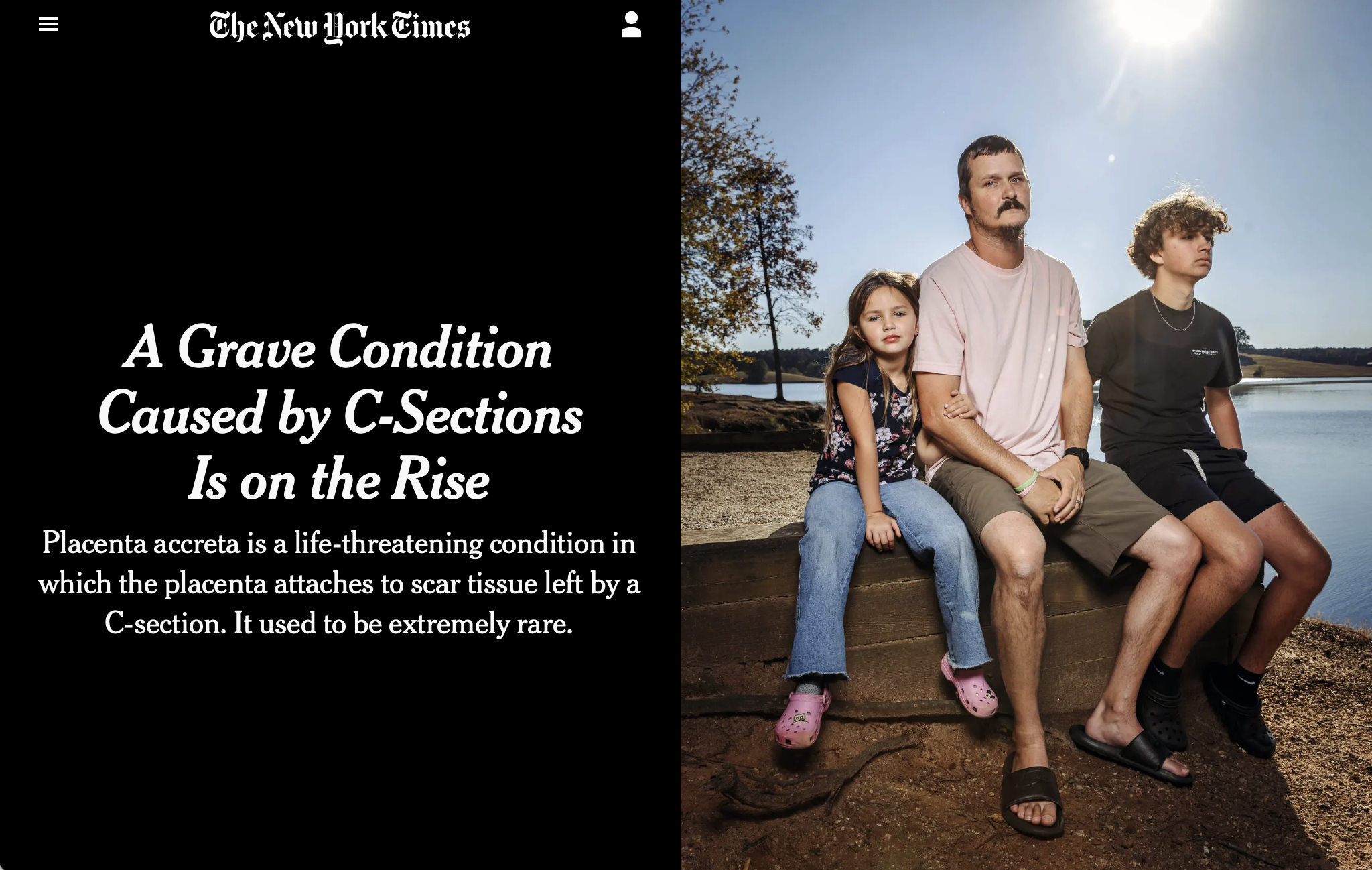
A Grave Condition Caused by C-Sections Is on the Rise
Placenta accreta is a life-threatening condition in which the placenta attaches to scar tissue left by a C-section. It used to be extremely rare.
The New York Times, by Sarah Kliff and Bianca Pallaro
Published November 6, 2025
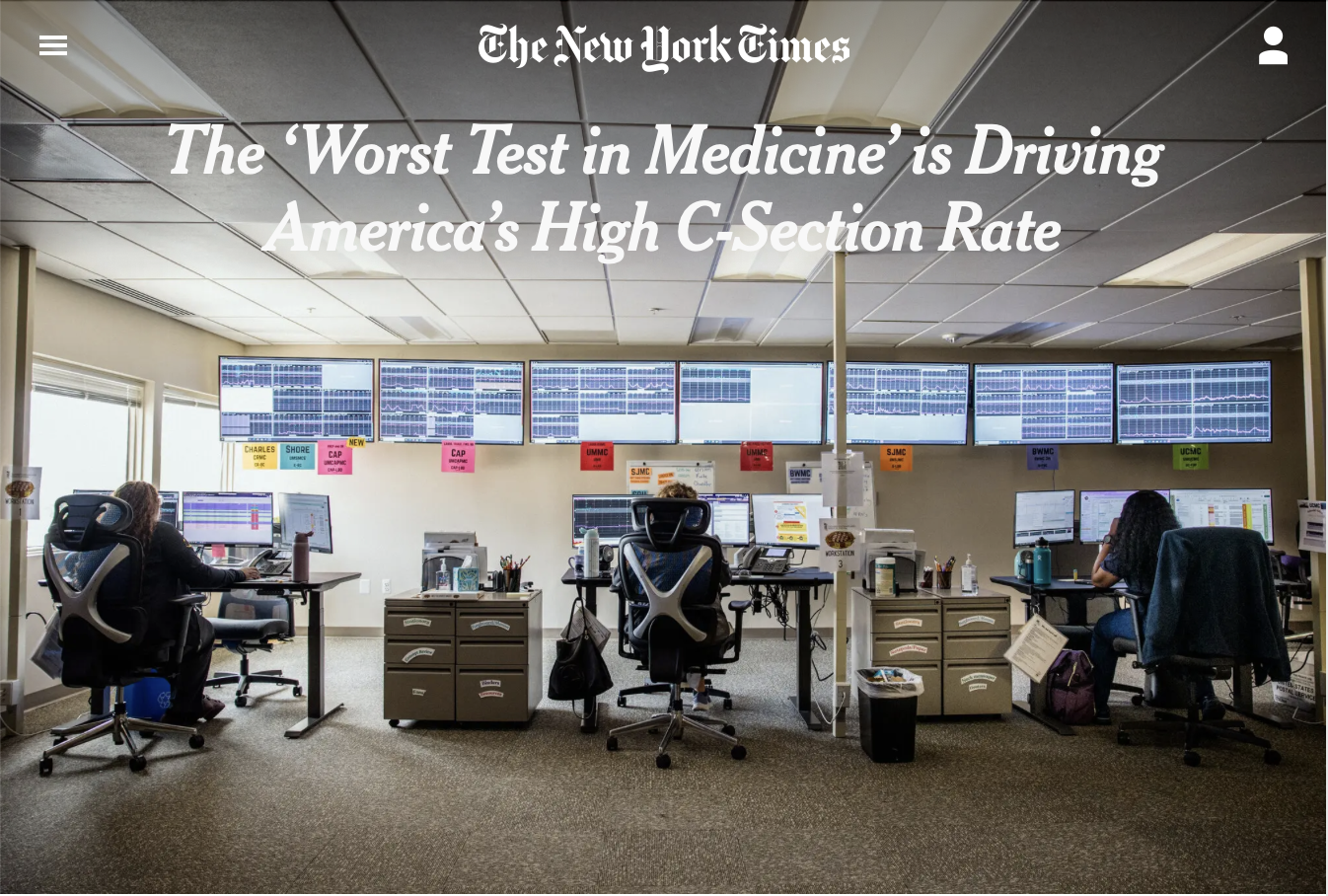
The ‘Worst Test in Medicine’ is Driving America’s High C-Section Rate
Round-the-clock fetal monitoring leads to unnecessary C-sections. But it’s used in nearly every birth because of business and legal concerns, The Times found.
The New York Times, by Sarah Kliff
Published November 6, 2025, updated November 10, 2025
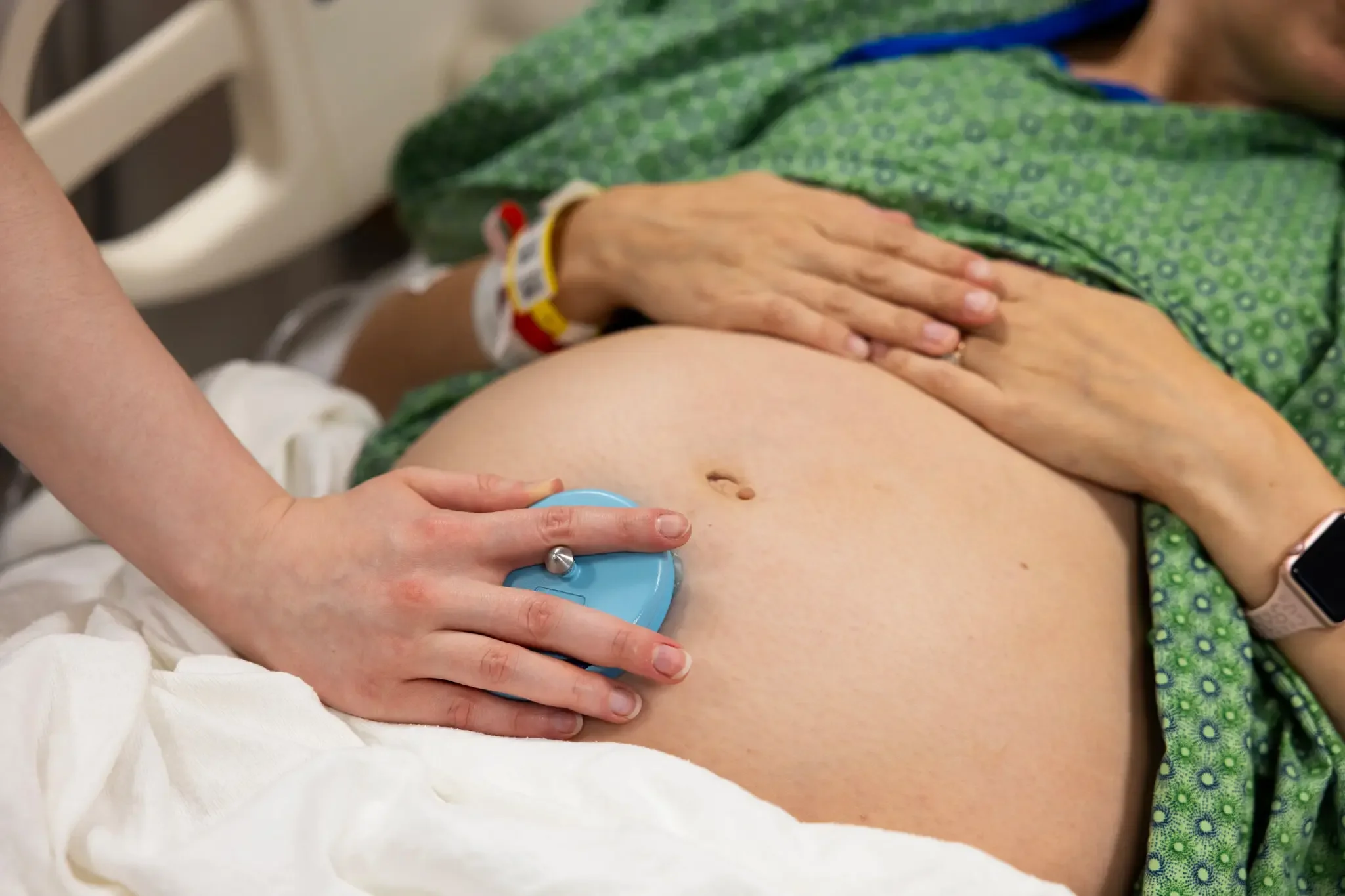
These Hospitals Figured Out How to Slash C-Section Rates
Financial and social incentives can nudge doctors away from the operating room.
The New York Times, by Sarah Kliff and Bianca Pallaro
Published November 24, 2025
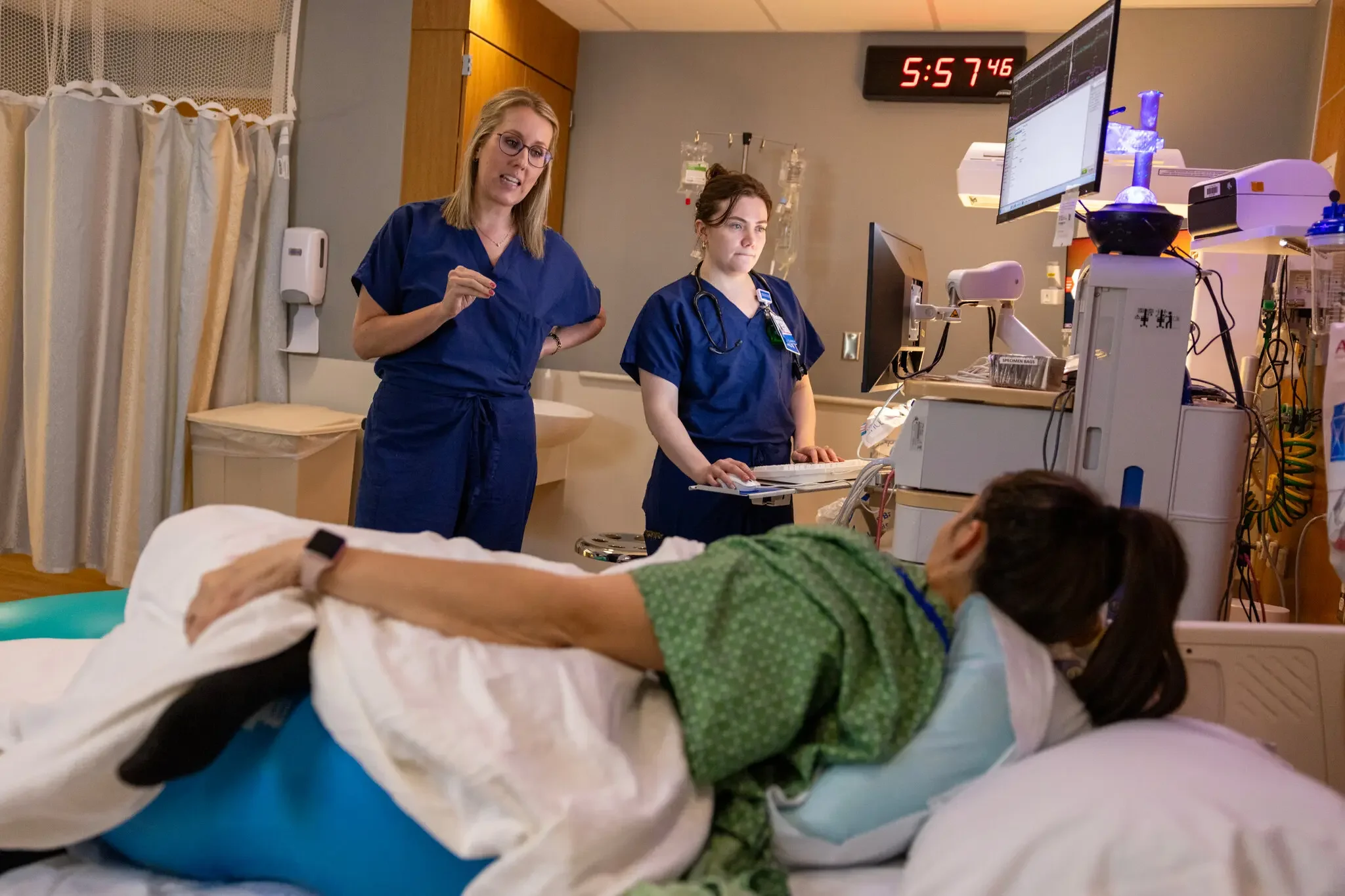
On the Labor and Delivery Floor, a Reporter Sees a Solution
C-sections can be lifesaving, but sometimes the procedure can be overused. Data helped show how a hospital decreased its rates of the operation in healthy first-time mothers.
The New York Times, by Sarah Kliff
Published November 24, 2025