
What is Placenta Accreta?
Placenta accreta, also known as placenta accreta spectrum (PAS), is a pregnancy complication that occurs when the placenta attaches too deeply into the wall of the uterus. Often times, it is attached too firmly through scar tissue and cannot separate normally after the baby is born, which can lead to severe bleeding. Early diagnosis and access to experienced, specialized care are critical to improving outcomes and saving lives.
Placenta accreta risk factors include prior cesarean (highest risk and risk increases with each subsequent), placenta previa with a previous cesarean or low lying placenta (risk of developing PAS is much higher), uterine surgery of any kind, and IVF.
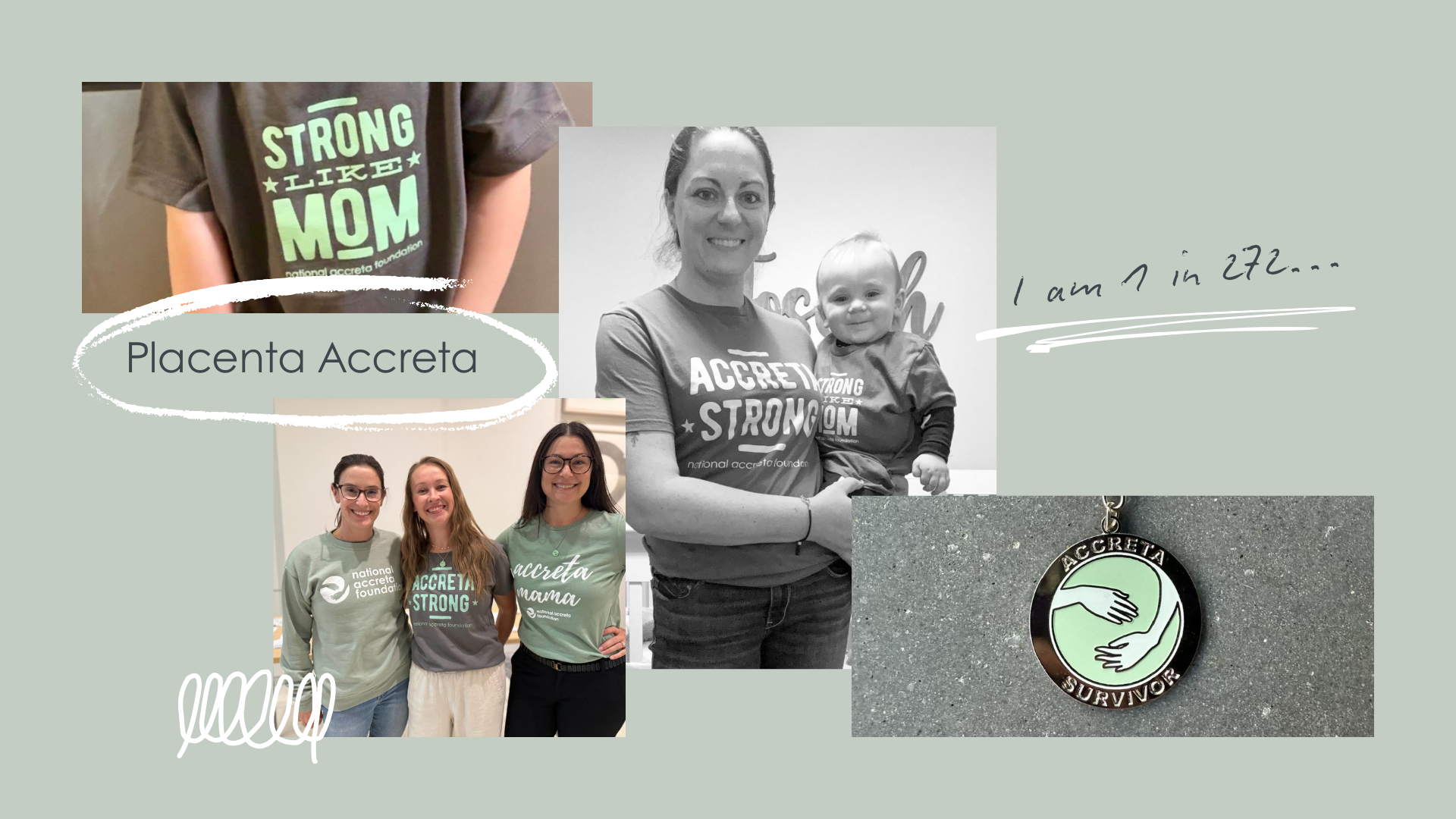
1 in 272
The estimated incidence of placenta accreta spectrum pregnancies has increased since the 1980s, from 1 in 1,250 births to as many as 1 in 272 births. The rates of placenta accreta, increta and percreta have risen parallel to the overall cesarean rate in the United States.
In 2024 cesareans occurred in nearly 1 in 3 births. That’s more than 1.1 million cesarean deliveries in the US every year. The risk for developing PAS in a future pregnancy increases with each c-section.